By Tim Peck
Mountain Guardian
March 8, 2006
The Annual Brewgrass Festival is a favorite among Asheville residents and others who come from quite far away to attend. The festival’s draw derives from its primary purpose: To promote high-quality microbrewed beers from the Asheville area and around the nation. A little bluegrass in the background all day long rounds out the offering as a perfect compliment to the high spirits. Last year, the festival sold out in one hour. I have attended the last two myself and already purchased my ticket for this year (on sale 3/5/06 at their website).
Festival attendees pay once for a $25.00 general admission ticket and are given a small beer glass as they enter the grounds. They can then stroll the grounds at will all day sampling various microbrewed beers pulled from cold taps that are housed in row after row of vendor booths throughout the venue—and all of this without charge. Only the food and merchandise vendors take money.
Most will lay out blankets on the ground or set up folding chairs facing the band stage. Lines are generally no more than 5 to 10 deep and move quickly. The sunny outdoor festival atmosphere keeps everyone in a happy mood and there is a general sense of camaraderie that is sustained until the festival closes after dusk. The longest lines are actually found at the portable restrooms tucked away at far corners where some take longer than others.
Among the local sponsors of the event are popular downtown pub Barley's Taproom, Greenlife Grocery, and the left-wing radio station WPEK 880 AM.
Wednesday, March 08, 2006
Wal-Mart Gets, Like, Totally Zoned
By Tim Peck
Mountain Guardian
March 8, 2006
The final Planning & Zoning Commission hearing on the rezoning of a few parcels in west Asheville for a new Wal-Mart Super Center was held on March 1st.
The usual suspects were present at the meeting to cheer and clap from the peanut gallery after every button-wearing naysayer made their public comment.
But to no avail. Rezoning favoring Wal-Mart passed 6 to 1, Chairman Tom Byers dissenting.
Byers felt that disapproval of the rezoning might possibly save the trailer park residents. This in spite of the fact that the property manager stated that the owner already had another bid with no provision to give the displaced residents any moving money; unlike Wal-Mart's offer of $4,000.
That $4,000 is now $7,500 each as a condition set by the commission in lieu of Wal-Mart laying unnecessary sidewalk 3/4 of a mile away to connect up with existing sidewalk. In their earlier presentation, Wal-Mart said that the sidewalk was unacceptable in the first place.
The real comedy occurred during public comment. The commission chair stated that the three-minute rule would be strictly enforced and the commissioners asked that comment be restricted to issues of land planning.
The crowd was a mix of anti-development types and more than a few Hispanics who stand to lose their housing when the property owner sells to Wal-Mart, or whomever. About 20 or more people came to the podium to speak and 2 of them addressed land planning issues. Several of them could speak English.
Most made faulty arguments about depressed wages, detrimental community impact, and the low esteem in which the company is held in the opinion of leftists. Others addressed the problem of the displacement of trailer park residents; seemingly blaming Wal-Mart for their dilemma. It should be noted that trailer parks are not allowed in the city per zoning ordinance. These trailers were ‘grandfathered’ in with no other guarantees or provisions for relocation.
One fellow looked like he had finally found that lost suit in the bottom drawer—and it still fit. Most others did not really bother to get dressed for the occasion. One by one, bearded and t-shirt clad, audience members strolled forward to denounce the project. Not one single person spoke in favor of the project.
About 5 non-English-speaking commentators addressed the commission; all needing a translator standing by. One of them brought a tape recording of a relative’s complaints and played into the microphone while a translator interpreted the recorded comments snippet-by-snippet. Several of our language-impaired Latinos brothers and sisters recited written statements that were clearly penned for them by English-savvy local activists. Several Spanish-only speakers asked that more information be supplied to them in Spanish because "none of us can speak English." Since legal immigration requires a working knowledge of English, this is an explicit admission by this spokesperson that she and her party are not in this country according to the law. I kept looking around for some police officers to help escort plaintiffs to a country where they might be considered legal citizens.
Alan Ditmore (who received 21,318 votes) argued against the project by pointing out that Wal-Mart refuses to dispense emergency contraception and because of this he has to wait behind school busses. This elicited a few giggles from the normally stoic commissioners. “You are directly creating people,” he said to the commission. A barely perceptible wave of laughter shimmered through the audience.
The stalwart anti-Wal-Mart activist Grant Millen was nowhere to be found. He would not have enjoyed himself.
Another demure and slinky female in her early 20's objected to the rezoning because she felt that the cars going in and out of Wal-Mart property would create excessive automobile emissions. With this statement, she perhaps unintentionally makes an argument in favor of the project: If her contention is true— that the nearby surface streets may become overwhelmed with pollution—this should imply that the new Wal-Mart in West Asheville will be very, very popular. Is that what she meant to say? I have to think so.
Mountain Guardian
March 8, 2006
The final Planning & Zoning Commission hearing on the rezoning of a few parcels in west Asheville for a new Wal-Mart Super Center was held on March 1st.
The usual suspects were present at the meeting to cheer and clap from the peanut gallery after every button-wearing naysayer made their public comment.
But to no avail. Rezoning favoring Wal-Mart passed 6 to 1, Chairman Tom Byers dissenting.
Byers felt that disapproval of the rezoning might possibly save the trailer park residents. This in spite of the fact that the property manager stated that the owner already had another bid with no provision to give the displaced residents any moving money; unlike Wal-Mart's offer of $4,000.
That $4,000 is now $7,500 each as a condition set by the commission in lieu of Wal-Mart laying unnecessary sidewalk 3/4 of a mile away to connect up with existing sidewalk. In their earlier presentation, Wal-Mart said that the sidewalk was unacceptable in the first place.
The real comedy occurred during public comment. The commission chair stated that the three-minute rule would be strictly enforced and the commissioners asked that comment be restricted to issues of land planning.
The crowd was a mix of anti-development types and more than a few Hispanics who stand to lose their housing when the property owner sells to Wal-Mart, or whomever. About 20 or more people came to the podium to speak and 2 of them addressed land planning issues. Several of them could speak English.
Most made faulty arguments about depressed wages, detrimental community impact, and the low esteem in which the company is held in the opinion of leftists. Others addressed the problem of the displacement of trailer park residents; seemingly blaming Wal-Mart for their dilemma. It should be noted that trailer parks are not allowed in the city per zoning ordinance. These trailers were ‘grandfathered’ in with no other guarantees or provisions for relocation.
One fellow looked like he had finally found that lost suit in the bottom drawer—and it still fit. Most others did not really bother to get dressed for the occasion. One by one, bearded and t-shirt clad, audience members strolled forward to denounce the project. Not one single person spoke in favor of the project.
About 5 non-English-speaking commentators addressed the commission; all needing a translator standing by. One of them brought a tape recording of a relative’s complaints and played into the microphone while a translator interpreted the recorded comments snippet-by-snippet. Several of our language-impaired Latinos brothers and sisters recited written statements that were clearly penned for them by English-savvy local activists. Several Spanish-only speakers asked that more information be supplied to them in Spanish because "none of us can speak English." Since legal immigration requires a working knowledge of English, this is an explicit admission by this spokesperson that she and her party are not in this country according to the law. I kept looking around for some police officers to help escort plaintiffs to a country where they might be considered legal citizens.
Alan Ditmore (who received 21,318 votes) argued against the project by pointing out that Wal-Mart refuses to dispense emergency contraception and because of this he has to wait behind school busses. This elicited a few giggles from the normally stoic commissioners. “You are directly creating people,” he said to the commission. A barely perceptible wave of laughter shimmered through the audience.
The stalwart anti-Wal-Mart activist Grant Millen was nowhere to be found. He would not have enjoyed himself.
Another demure and slinky female in her early 20's objected to the rezoning because she felt that the cars going in and out of Wal-Mart property would create excessive automobile emissions. With this statement, she perhaps unintentionally makes an argument in favor of the project: If her contention is true— that the nearby surface streets may become overwhelmed with pollution—this should imply that the new Wal-Mart in West Asheville will be very, very popular. Is that what she meant to say? I have to think so.


The Block
By Tim Peck
Mountain Guardian
March 8, 2006
The missed story coming out of the inaugural Planning and Economic Development Committee meeting, held at City Hall on March 1, occurred during discussions about “The Block,” where long-time Asheville resident, monied businessman and former City Council member Gene Ellison gave the committee an earful and a brief lesson in basic economics.
The Block
The Block, as it is generically called, is a section of downtown Asheville, in the area around Market and Eagle Streets just off Biltmore Avenue, and has been part of an extensive push for growth in the central business district. It has also been the focus of multifaceted debates concerning property rights, business development and cultural preservation; many of them occurring in City Hall.
This neighborhood has undergone several distinct phases over many decades; even going back as far as the Depression Era. That difficult era pounded this cloistered Black community hard and it is still bruising.
In the Jazz Era, it was a bastion of cultural and commercial activity and a foundation for filial cohesion where Blacks could comfortably congregate as a community and enjoy the sights and sounds of urbane conviviality in the clubs, restaurants and doorways of Eagle and Market Streets.
During the short-lived era of the Great Society, it became the target of urban renewal. City fathers at that time concluded that The Block and its surrounding area, comprised mostly of Blacks, was a blight on the city and that it‘s poverty-stricken inhabitants would fare much better elsewhere. So, with the handy lubricant of federal money, the city broke up the tight community and the residents were scattered around the city in newly constructed public housing “projects,” including Pisgah View and Deerfield. They would replace the existing neighborhood with assorted parking lots and with a new City of Asheville Public Works Department and garage (for housing garbage trucks) which has been given the amusing moniker “The Taj Garage” (see G.S. 160A, Article 22, Urban Redevelopment Law, § 160A-503 (2)).
Around the mid-1970s, the inhabitants and patrons of The Block began to disperse. This phenomenon is in part attributable to the cumulative effects of desegregation. Blacks were increasingly able to move more easily in wider circles and this diluted the tribal clustering that was, and still is, typical of marginalized ethnic minorities.
It has recently suffered through the ravages of a burgeoning and entrenched illicit drug culture and the concurrent stifling atmosphere of crime, misdemeanor and ignominy.
But this once-blighted neighborhood has since been bought out, bulldozed, built up and cleaned up and it seems now to be a fairly viable and promising business area. The Black-owned businesses there are well integrated with the vital and diverse character of downtown. Its streets are currently the outdoor urban venue for the annual Goombay Festival, a celebration of African and Caribbean culture that began as a fundraiser to help revitalize the area. And property owners are still holding out for a substantial return on their investment in this storied quarter.
The Planners
In 1993, Gene Ellison was seated as a council member when the South Pack Square Redevelopment Plan was passed. This plan provided a sound and acceptable framework for the area's development.
However, new infill housing proposals promised to undermine the spirit of the plan under the pretext of “broad interpretation” and “flexibility.” The South Pack Square Development Plan Task Force endorsed this redevelopment proposal that emerged out of a budget amendment to accept $1,140,000 of federal money to eliminate blight ($800,000 of HUD Section 108 funds and $340,000 of EDI grant monies). “The money would be used to help Eagle/Market Streets Development Corporation (EMSDC) in the acquisition and redevelopment of three key properties in the South Pack Square redevelopment area.” (EMSDC is the nonprofit agency created by the city to oversee the redevelopment of The Block.)
“By itself, it will create over 8,000 square feet of additional retail and office space and 14 residential units. The funding would also leverage additional monies to be spent in a Mt. Zion Church project, resulting in a total of approximately 12,000 square feet of retail and office space and a total of 47 residential units. Five historically significant buildings will be restored to Secretary of Interior standards and a new infill building will be constructed on vacant property if these two projects are realized.”
At the City Council meeting of December 16, 2003, Mayor Whorley announced that attorney’s Gene Ellison and Howard McGlohon had filed a temporary restraining order against the City of Asheville and Eagle/Market Streets Development Corporation preventing a vote on the budget amendment. (McGlohon is the husband of the Assistant City Attorney Martha Walker-McGlohon and could give this action the appearance of a conflict of interest.)
The issue would eventually be debated in one of the most contentious City Council meetings on record. Tempers flared and patience wore thin. But a vote had to be taken. Council member Carl Mumpower declared this proposal to be nothing better than taxpayer-funded gentrification and the measure failed with Joe Dunn and Terry Bellamy siding with Mumpower against.
The Meeting
At the March 1st Planning and Economic Development Committee meeting, the touchy subject of The Block surfaced once again.
Gene Ellison, here to speak on the matter, patiently waited through presentations on plans for annexation and city real estate while standing just outside the packed meeting room eating a cheeseburger with one hand and wiping up the drippings with a napkin in the other.
After 20 minutes of discussion of The Block among council members and staff, Chairman Jan Davis allowed an agitated Ellison, co-owner of the Ritz building on South Market Street, to speak out of turn and offer his public comment during staff's presentation, explaining that he felt Ellison’s comments would be "germane to the present discussion." Indeed they were.
Citizen Ellison gave the committee a tongue-lashing about how he and other investors in The Block had been hoodwinked by the city since passage of the redevelopment plan. He and other property owners have invested heavily in The Block under one planning vision and the city turned around in October of 2003 and entertained development proposals that would significantly devalue their investments. Those private investments add up to over $2,000,000.
Ellison said that "inverse condemnation is no different than the ordinary kind." His demeanor and the character of his public comment made it unmistakable that Ellison and company were quite annoyed at this imposed hardship and quite adamant that some resolution be expedited in this matter.
By allowing subsidized, high-rise housing structures that are towering and generally incompatible with the promise of The Block and which would overshadow other privately-held properties, those properties would be effectively drained of their value as investments.
This would result in a profound reversal of fortune for Ellison and his fellow investors and in the eyes of Ellison & Friends amounts to a government taking for which they would appreciate some relief. Ellison was on record back in 1993 saying that the developments proposed would violate the South Pack Square Redevelopment Plans.
Now we are hearing from Ellison that "we've got people with no investment in these properties making decisions.”
In staff’s presentation on The Block, the committee was reminded that one stated goal of the development vision for this area was the preservation and promotion of a vestigial African-American culture spawned and nurtured in this historic part of town. Referencing this race-based public policy, Ellison now barks at the committee saying, "You can go ahead and take race out of this issue. Let me tell you something, there is no such thing as black money. We are businessmen and this is all about business! All money is green.”
Mountain Guardian
March 8, 2006
The missed story coming out of the inaugural Planning and Economic Development Committee meeting, held at City Hall on March 1, occurred during discussions about “The Block,” where long-time Asheville resident, monied businessman and former City Council member Gene Ellison gave the committee an earful and a brief lesson in basic economics.
The Block
The Block, as it is generically called, is a section of downtown Asheville, in the area around Market and Eagle Streets just off Biltmore Avenue, and has been part of an extensive push for growth in the central business district. It has also been the focus of multifaceted debates concerning property rights, business development and cultural preservation; many of them occurring in City Hall.
This neighborhood has undergone several distinct phases over many decades; even going back as far as the Depression Era. That difficult era pounded this cloistered Black community hard and it is still bruising.
In the Jazz Era, it was a bastion of cultural and commercial activity and a foundation for filial cohesion where Blacks could comfortably congregate as a community and enjoy the sights and sounds of urbane conviviality in the clubs, restaurants and doorways of Eagle and Market Streets.
During the short-lived era of the Great Society, it became the target of urban renewal. City fathers at that time concluded that The Block and its surrounding area, comprised mostly of Blacks, was a blight on the city and that it‘s poverty-stricken inhabitants would fare much better elsewhere. So, with the handy lubricant of federal money, the city broke up the tight community and the residents were scattered around the city in newly constructed public housing “projects,” including Pisgah View and Deerfield. They would replace the existing neighborhood with assorted parking lots and with a new City of Asheville Public Works Department and garage (for housing garbage trucks) which has been given the amusing moniker “The Taj Garage” (see G.S. 160A, Article 22, Urban Redevelopment Law, § 160A-503 (2)).
Around the mid-1970s, the inhabitants and patrons of The Block began to disperse. This phenomenon is in part attributable to the cumulative effects of desegregation. Blacks were increasingly able to move more easily in wider circles and this diluted the tribal clustering that was, and still is, typical of marginalized ethnic minorities.
It has recently suffered through the ravages of a burgeoning and entrenched illicit drug culture and the concurrent stifling atmosphere of crime, misdemeanor and ignominy.
But this once-blighted neighborhood has since been bought out, bulldozed, built up and cleaned up and it seems now to be a fairly viable and promising business area. The Black-owned businesses there are well integrated with the vital and diverse character of downtown. Its streets are currently the outdoor urban venue for the annual Goombay Festival, a celebration of African and Caribbean culture that began as a fundraiser to help revitalize the area. And property owners are still holding out for a substantial return on their investment in this storied quarter.
The Planners
In 1993, Gene Ellison was seated as a council member when the South Pack Square Redevelopment Plan was passed. This plan provided a sound and acceptable framework for the area's development.
However, new infill housing proposals promised to undermine the spirit of the plan under the pretext of “broad interpretation” and “flexibility.” The South Pack Square Development Plan Task Force endorsed this redevelopment proposal that emerged out of a budget amendment to accept $1,140,000 of federal money to eliminate blight ($800,000 of HUD Section 108 funds and $340,000 of EDI grant monies). “The money would be used to help Eagle/Market Streets Development Corporation (EMSDC) in the acquisition and redevelopment of three key properties in the South Pack Square redevelopment area.” (EMSDC is the nonprofit agency created by the city to oversee the redevelopment of The Block.)
“By itself, it will create over 8,000 square feet of additional retail and office space and 14 residential units. The funding would also leverage additional monies to be spent in a Mt. Zion Church project, resulting in a total of approximately 12,000 square feet of retail and office space and a total of 47 residential units. Five historically significant buildings will be restored to Secretary of Interior standards and a new infill building will be constructed on vacant property if these two projects are realized.”
At the City Council meeting of December 16, 2003, Mayor Whorley announced that attorney’s Gene Ellison and Howard McGlohon had filed a temporary restraining order against the City of Asheville and Eagle/Market Streets Development Corporation preventing a vote on the budget amendment. (McGlohon is the husband of the Assistant City Attorney Martha Walker-McGlohon and could give this action the appearance of a conflict of interest.)
The issue would eventually be debated in one of the most contentious City Council meetings on record. Tempers flared and patience wore thin. But a vote had to be taken. Council member Carl Mumpower declared this proposal to be nothing better than taxpayer-funded gentrification and the measure failed with Joe Dunn and Terry Bellamy siding with Mumpower against.
The Meeting
At the March 1st Planning and Economic Development Committee meeting, the touchy subject of The Block surfaced once again.
Gene Ellison, here to speak on the matter, patiently waited through presentations on plans for annexation and city real estate while standing just outside the packed meeting room eating a cheeseburger with one hand and wiping up the drippings with a napkin in the other.
After 20 minutes of discussion of The Block among council members and staff, Chairman Jan Davis allowed an agitated Ellison, co-owner of the Ritz building on South Market Street, to speak out of turn and offer his public comment during staff's presentation, explaining that he felt Ellison’s comments would be "germane to the present discussion." Indeed they were.
Citizen Ellison gave the committee a tongue-lashing about how he and other investors in The Block had been hoodwinked by the city since passage of the redevelopment plan. He and other property owners have invested heavily in The Block under one planning vision and the city turned around in October of 2003 and entertained development proposals that would significantly devalue their investments. Those private investments add up to over $2,000,000.
Ellison said that "inverse condemnation is no different than the ordinary kind." His demeanor and the character of his public comment made it unmistakable that Ellison and company were quite annoyed at this imposed hardship and quite adamant that some resolution be expedited in this matter.
By allowing subsidized, high-rise housing structures that are towering and generally incompatible with the promise of The Block and which would overshadow other privately-held properties, those properties would be effectively drained of their value as investments.
This would result in a profound reversal of fortune for Ellison and his fellow investors and in the eyes of Ellison & Friends amounts to a government taking for which they would appreciate some relief. Ellison was on record back in 1993 saying that the developments proposed would violate the South Pack Square Redevelopment Plans.
Now we are hearing from Ellison that "we've got people with no investment in these properties making decisions.”
In staff’s presentation on The Block, the committee was reminded that one stated goal of the development vision for this area was the preservation and promotion of a vestigial African-American culture spawned and nurtured in this historic part of town. Referencing this race-based public policy, Ellison now barks at the committee saying, "You can go ahead and take race out of this issue. Let me tell you something, there is no such thing as black money. We are businessmen and this is all about business! All money is green.”
Annexation on the Fast Track
By Tim Peck
Mountain Guardian
March 8, 2006
Adding to concerns about zoning, revaluation, development and district elections, Buncombe County must confront another controversy on the horizon: Many unsuspecting Buncombe County residents could very well have a new mailing address in the not too distant future: Asheville, NC.
At 8:00 AM on Tuesday, March 6th, the Asheville City Council met at the downtown municipal building to discuss the future enlargement of the city by way of annexation. The meeting was attended by a majority of council members (absent Newman and Jones), a team of staff, a fair number of reporters, and a dismal few citizens. Public officials and media outnumbered citizens 6 to 1. Perhaps it was the unusual and smallish meeting place or the time of day that discouraged participation; or perhaps the absence of TV coverage. Normally, council will meet in ample chambers at city hall with video cameras documenting the proceedings.
Members of city staff presented a large, color-coded map representing those areas under consideration to be engulfed by the boundaries of Asheville’s expanding city limits. The Resolution of Consideration for Annexation is required by statute on a periodic basis to formalize the process and announce to county dwellers that certain lands may be subject to annexation “within the reasonably near future.” This “near future” used to be no less than one year after the announcement.
The resolution before council now reflects changes that will allow annexation to proceed much faster. Changes in the law now make it possible for qualified areas to be officially annexed 70 days after passage of the resolution instead of one year as the law previously required.
Prior to the meeting, MG had spoken with Scott Shuford, the department head of the city’s planning department, on how many people could potentially be affected by this plan. Shuford said that, between the areas to be annexed and the consequent extension of the Extra-Territorial Jurisdiction (ETJ) out an additional 3 miles, he would estimate approximately 30,000 could have a new address in a fortnight. They would also be able to participate in the double-taxation that current city residents are subjected to. Beyond the five-figure numbers added to the city’s tax rolls, should all the areas under consideration be annexed, the city would double its physical size.
After the staff presentation explaining the map and its meaning, council member Robin Cape took the floor and asked staff about the “large white area in the middle of the map.” She and staff concurred that this was the Biltmore Estate and Cape asked why this area of town was exempt from the annexation plans. Scott Shuford was not in attendance and Julia Cogburn attempted an explanation. Cape politely asked that staff look into it and help her understand this glaring peculiarity.
The explanation given by staff was a bit ambiguous, especially as applied to the Biltmore Inn. In this case, the estate is not under consideration because potential future annexation areas must meet specific density and development criteria as a condition of consideration. Biltmore Estate has so few residences across its vast acreage and does not qualify for annexation under state law for this reason (see G.S. § 160A‑48).
Mayor Terry Bellamy asked the small audience if they had questions or comments. This MG reporter asked the only question: “Do you favor the incorporation of Leicester?” After an awkward and breathless silence, Bellamy asked, “Are there any other comments?” Apparently, and perhaps for political reasons, questions seemed to have been magically transformed into comments—to the decided bemusement of the questioner. But before moving on, council member Jan Davis interrupted saying that the question deserved an answer. Davis commented in general terms that there can be conflicting interests involved and the city wants to meet and work together with communities to determine the best solution for providing services going forward. City Attorney Bob Oats supplemented this saying that as the incorporation process moves forward council will have a chance later to take a position on this matter.
With no more comments or questions apparent, a motion was made and a vote taken to adopt the resolution. Council approved the resolution 5-1, Dr. Carl Mumpower dissenting. The 12-minute meeting adjourned in time for breakfast.
Opinion
It seems to this reporter that between the logistical shell-game, the paltry communications, and the hurried legislative process, this whole perfunctory affair was conducted in a way that was designed to exclude the public. The only avenue open to redress grievance in this matter is through the courts after the fact. North Carolina law distinguishes itself with respect to forced annexation in that those about to be subsumed by a city have no say in the matter. Cities in this state are under no obligation to engage people from those areas under consideration in any dialogue concerning their future and a city’s plans for it. As constituted, North Carolina’s involuntary annexation laws are a particularly oily form of eminent domain.
MP3 audio from the meeting
Mountain Guardian
March 8, 2006
Adding to concerns about zoning, revaluation, development and district elections, Buncombe County must confront another controversy on the horizon: Many unsuspecting Buncombe County residents could very well have a new mailing address in the not too distant future: Asheville, NC.
At 8:00 AM on Tuesday, March 6th, the Asheville City Council met at the downtown municipal building to discuss the future enlargement of the city by way of annexation. The meeting was attended by a majority of council members (absent Newman and Jones), a team of staff, a fair number of reporters, and a dismal few citizens. Public officials and media outnumbered citizens 6 to 1. Perhaps it was the unusual and smallish meeting place or the time of day that discouraged participation; or perhaps the absence of TV coverage. Normally, council will meet in ample chambers at city hall with video cameras documenting the proceedings.
Members of city staff presented a large, color-coded map representing those areas under consideration to be engulfed by the boundaries of Asheville’s expanding city limits. The Resolution of Consideration for Annexation is required by statute on a periodic basis to formalize the process and announce to county dwellers that certain lands may be subject to annexation “within the reasonably near future.” This “near future” used to be no less than one year after the announcement.
The resolution before council now reflects changes that will allow annexation to proceed much faster. Changes in the law now make it possible for qualified areas to be officially annexed 70 days after passage of the resolution instead of one year as the law previously required.
Prior to the meeting, MG had spoken with Scott Shuford, the department head of the city’s planning department, on how many people could potentially be affected by this plan. Shuford said that, between the areas to be annexed and the consequent extension of the Extra-Territorial Jurisdiction (ETJ) out an additional 3 miles, he would estimate approximately 30,000 could have a new address in a fortnight. They would also be able to participate in the double-taxation that current city residents are subjected to. Beyond the five-figure numbers added to the city’s tax rolls, should all the areas under consideration be annexed, the city would double its physical size.
After the staff presentation explaining the map and its meaning, council member Robin Cape took the floor and asked staff about the “large white area in the middle of the map.” She and staff concurred that this was the Biltmore Estate and Cape asked why this area of town was exempt from the annexation plans. Scott Shuford was not in attendance and Julia Cogburn attempted an explanation. Cape politely asked that staff look into it and help her understand this glaring peculiarity.
The explanation given by staff was a bit ambiguous, especially as applied to the Biltmore Inn. In this case, the estate is not under consideration because potential future annexation areas must meet specific density and development criteria as a condition of consideration. Biltmore Estate has so few residences across its vast acreage and does not qualify for annexation under state law for this reason (see G.S. § 160A‑48).
Mayor Terry Bellamy asked the small audience if they had questions or comments. This MG reporter asked the only question: “Do you favor the incorporation of Leicester?” After an awkward and breathless silence, Bellamy asked, “Are there any other comments?” Apparently, and perhaps for political reasons, questions seemed to have been magically transformed into comments—to the decided bemusement of the questioner. But before moving on, council member Jan Davis interrupted saying that the question deserved an answer. Davis commented in general terms that there can be conflicting interests involved and the city wants to meet and work together with communities to determine the best solution for providing services going forward. City Attorney Bob Oats supplemented this saying that as the incorporation process moves forward council will have a chance later to take a position on this matter.
With no more comments or questions apparent, a motion was made and a vote taken to adopt the resolution. Council approved the resolution 5-1, Dr. Carl Mumpower dissenting. The 12-minute meeting adjourned in time for breakfast.
Opinion
It seems to this reporter that between the logistical shell-game, the paltry communications, and the hurried legislative process, this whole perfunctory affair was conducted in a way that was designed to exclude the public. The only avenue open to redress grievance in this matter is through the courts after the fact. North Carolina law distinguishes itself with respect to forced annexation in that those about to be subsumed by a city have no say in the matter. Cities in this state are under no obligation to engage people from those areas under consideration in any dialogue concerning their future and a city’s plans for it. As constituted, North Carolina’s involuntary annexation laws are a particularly oily form of eminent domain.
At any regular or special meeting held no sooner than the tenth day following the public hearing and not later than 90 days following such public hearing, the governing board shall have authority to adopt an ordinance extending the corporate limits of the municipality to include all, or such part, of the area described in the notice of public hearing which meets the requirements of G.S. 160A-48 and which the governing board has concluded should be annexed. -G.S. 160A-49 (e), Procedure for annexation.
MP3 audio from the meeting
Monday, March 06, 2006
Citizens for Change
Attended the Citizens for Change meeting at Shoney's on Smokey Park Highway. Under discussion were the topics of zoning and annexation. I passed around the city's map of areas under consideration for annexation.
Friday, February 24, 2006
Terry Nation
By Tim Peck
Mountain Guardian
The Annual Brewgrass Festival is a favorite among Asheville residents and others who come from quite far away to attend. The festival’s draw derives from its primary purpose: To promote high-quality microbrewed beers from the Asheville area and around the nation. A little bluegrass in the background all day long rounds out the offering as a perfect compliment to the high spirits. Last year, the festival sold out in one hour. I have attended the last two myself and already purchased my ticket for this year (on sale 3/5/06 at their website).
Festival attendees pay once for a $25.00 general admission ticket and are given a small beer glass as they enter the grounds. They can then stroll the grounds at will all day sampling various microbrewed beers pulled from cold taps that are housed in row after row of vendor booths throughout the venue—and all of this without charge. Only the food and merchandise vendors take money.
Most will lay out blankets on the ground or set up folding chairs facing the band stage. Lines are generally no more than 5 to 10 deep and move quickly. The sunny outdoor festival atmosphere keeps everyone in a happy mood and there is a general sense of camaraderie that is sustained until the festival closes after dusk. The longest lines are actually found at the portable restrooms tucked away at far corners where some take longer than others.
Among the local sponsors of the event are popular downtown pub Barley's Taproom, Greenlife Grocery, and the left-wing radio station WPEK 880 AM.
 This particular pursuit of happiness, however, was threatened by the city's mayor in an appalling demonstration of hubris and naked appeasement. Asheville's Mayor Terry Bellamy—who promised to be a mayor for all of the people and not just those who elected her—took active steps in a recent City Council meeting that would have made the sale and possession of beer at the 10th Annual Brewgrass Festival illegal.
First, the mayor removed an item from the City Council’s consent agenda that would have allowed the Brewfest, and 11 other popular festivals including Goombay, to sell and possess beer and/or wine. After passing the consent agenda without that item in it, Bellamy hastily called for a vote on the singled-out festival resolution without any discussion on the matter. Council voted on the resolution and it passed 6-1 with Bellamy against.
The mayor is a known teetotaler, as are many in Asheville and this is a perfectly reasonable position to take for any private citizen; that is their choice. Bellamy's personal choice on this matter stems from her religious faith—again, a matter of personal choice that interferes with no one else's personal choices.
But for a sitting elected official to impose her own personal religious beliefs on the citizens and festival-goers of Asheville and beyond is a disgrace and a perversion of her oath. The mayor's moral views on alcohol consumption are simply not relevant. Nor are her moral views on the consumption of chocolate, pizza or gummi bears.
Unable to separate church and state, in either her mind or her official duties, the mayor, with this vote, put the imposition of her own personal religious beliefs on others above the will of the people and the economic interests of Asheville. Had the mayor's attitude been shared by a majority on council, Brewfest attendees would have had to settle for twelve hours sipping sweet tea.
Freedom breeds plurality. And in a free nation, the statecraft of politics has the responsibility of governing a pluralistic society; that is, a society with a multitude of subjective beliefs, principles and preferences that may sometimes be at odds with one another. One specific religious faith, however piously held, cannot be made the standard of morality in a pluralistic society.
Governments, however, much like physicians, must first do no harm. They must constrain their purview to essentials and look after only those elements of society that are held in common: the protection of individual rights from encroachments, predations and violations. When a city's mayor deigns to control the legal behavior of a free people, she has crossed the line between governing and controlling. This legislative act by an elected government official represents the kind of harm that comes to individual liberties when the objective domain of politics is overtly tainted with the subjective sensibilities of religion.
If a lawmaker chooses to deny themselves certain of life’s pleasures, that is their business. But when they want to also deny me those pleasures, then it becomes my business. The Mayor does not have the right to sacrifice my happiness on the altar of her religiously-based moral predilections.
I’m happy that the Founding Fathers formulated a social system that is designed to protect my rights. I would be very pleased if modern politicians would limit their range of action to the system that the founders designed.
In my opinion, not only should a person have the right to pursue their own happiness, I believe they should be able to do so in the manner of their choosing without the strained permission of puritans.
Mountain Guardian
The Annual Brewgrass Festival is a favorite among Asheville residents and others who come from quite far away to attend. The festival’s draw derives from its primary purpose: To promote high-quality microbrewed beers from the Asheville area and around the nation. A little bluegrass in the background all day long rounds out the offering as a perfect compliment to the high spirits. Last year, the festival sold out in one hour. I have attended the last two myself and already purchased my ticket for this year (on sale 3/5/06 at their website).
Festival attendees pay once for a $25.00 general admission ticket and are given a small beer glass as they enter the grounds. They can then stroll the grounds at will all day sampling various microbrewed beers pulled from cold taps that are housed in row after row of vendor booths throughout the venue—and all of this without charge. Only the food and merchandise vendors take money.
Most will lay out blankets on the ground or set up folding chairs facing the band stage. Lines are generally no more than 5 to 10 deep and move quickly. The sunny outdoor festival atmosphere keeps everyone in a happy mood and there is a general sense of camaraderie that is sustained until the festival closes after dusk. The longest lines are actually found at the portable restrooms tucked away at far corners where some take longer than others.
Among the local sponsors of the event are popular downtown pub Barley's Taproom, Greenlife Grocery, and the left-wing radio station WPEK 880 AM.
 This particular pursuit of happiness, however, was threatened by the city's mayor in an appalling demonstration of hubris and naked appeasement. Asheville's Mayor Terry Bellamy—who promised to be a mayor for all of the people and not just those who elected her—took active steps in a recent City Council meeting that would have made the sale and possession of beer at the 10th Annual Brewgrass Festival illegal.
First, the mayor removed an item from the City Council’s consent agenda that would have allowed the Brewfest, and 11 other popular festivals including Goombay, to sell and possess beer and/or wine. After passing the consent agenda without that item in it, Bellamy hastily called for a vote on the singled-out festival resolution without any discussion on the matter. Council voted on the resolution and it passed 6-1 with Bellamy against.
“Resolutions making provisions for the possession and consumption of malt beverages and/or unfortified wine at the following 2006 Special Events: 3rd Annual Earth Day Festival on April 15, 2006; Mountain Sports Festival on May 5-7, 2006; Downtown After 5 events on May 19, June 16, July 21, August 18, and September 15, 2006; 1st Annual Asheville Urban Jazz Festival on June 10, 2006; Fourth of July Celebration on July 4, 2006; 75th Annual City of Asheville Open Tennis Championships on July 20-21, 2006; 29th Bele Chere Festival on July 28-20, 2006; GoomBay! Festival on August 26-28, 2006; Fiesta Latina Festival on September 16, 2006; Asheville Greek Festival on September 22-24, 2006; 10th Annual Brewgrass Festival on September 30, 2006; and the Asheville Grizzlies home games at various dates throughout the summer.”This was clearly a calculated move on the mayor's part. Knowing that her position was unsupportable and that the measure would pass easily without her assent, she decided to make a purely symbolic gesture out of her one vote.
The mayor is a known teetotaler, as are many in Asheville and this is a perfectly reasonable position to take for any private citizen; that is their choice. Bellamy's personal choice on this matter stems from her religious faith—again, a matter of personal choice that interferes with no one else's personal choices.
But for a sitting elected official to impose her own personal religious beliefs on the citizens and festival-goers of Asheville and beyond is a disgrace and a perversion of her oath. The mayor's moral views on alcohol consumption are simply not relevant. Nor are her moral views on the consumption of chocolate, pizza or gummi bears.
Unable to separate church and state, in either her mind or her official duties, the mayor, with this vote, put the imposition of her own personal religious beliefs on others above the will of the people and the economic interests of Asheville. Had the mayor's attitude been shared by a majority on council, Brewfest attendees would have had to settle for twelve hours sipping sweet tea.
Freedom breeds plurality. And in a free nation, the statecraft of politics has the responsibility of governing a pluralistic society; that is, a society with a multitude of subjective beliefs, principles and preferences that may sometimes be at odds with one another. One specific religious faith, however piously held, cannot be made the standard of morality in a pluralistic society.
Governments, however, much like physicians, must first do no harm. They must constrain their purview to essentials and look after only those elements of society that are held in common: the protection of individual rights from encroachments, predations and violations. When a city's mayor deigns to control the legal behavior of a free people, she has crossed the line between governing and controlling. This legislative act by an elected government official represents the kind of harm that comes to individual liberties when the objective domain of politics is overtly tainted with the subjective sensibilities of religion.
If a lawmaker chooses to deny themselves certain of life’s pleasures, that is their business. But when they want to also deny me those pleasures, then it becomes my business. The Mayor does not have the right to sacrifice my happiness on the altar of her religiously-based moral predilections.
I’m happy that the Founding Fathers formulated a social system that is designed to protect my rights. I would be very pleased if modern politicians would limit their range of action to the system that the founders designed.
In my opinion, not only should a person have the right to pursue their own happiness, I believe they should be able to do so in the manner of their choosing without the strained permission of puritans.
Wednesday, February 08, 2006
Whose Business Is It Anyway?
By Tim Peck
Mountain Guardian
February 8, 2006
"That government is best which governs least." -Thomas Paine
Should the government own and operate a commercial business?
Should the government run schools, water systems or outdoor music festivals?
Does the government have special knowledge that makes it the best vehicle for delivering products and services to the citizens who have loaned it their power?
Or should government limit itself to what it does well and leave the rest to the marketplace of talent, expertise and efficiency.
There are two small towns in America that are attempting to answer these questions; not theoretically, but with real public policy enactment. These two towns have very different views on the role of government in small-town America: One is Sandy Springs, Georgia, and the other is Arcata, California.
Sandy Springs has adopted a more libertarian, hands-off approach while Arcata has its micromanaging fingerprints on virtually every issue in the public arena, to even include officially passing judgment on national and international matters.
The coastal college town of Arcata, California, situated in upstate Humboldt County near the famous marijuana fields of The Emerald Triangle, has finally rounded out its 5-member city council with an all-progressive team, to include the mayor. In fact, three current council members belong to the Green Party. Even the local sheriff calls his hometown “the People’s Republic of Arcata.”
But I don't know who to believe; number one rated Fox News or a local Arcata broadsheet that characterizes a prominent female Fox News correspondent as one of “the shimmering Botox-blonde newsbunnies the network appears able to manufacture at will.”
At any rate, perhaps we can judge the nature of their city government more by their actions than any other measure.
The anti-Bush council adopted a “New Year’s Resolution” demanding the impeachment or resignation of the President and Vice-President for the crimes of misleading America into war, the crime of responding slowly to Hurricane Katrina, the crime of spying, and the crime of torture.
Arcata has produced a Greenhouse Gas Reduction Plan and a Pesticide Reduction Plan. Among its several boards and commissions are the Nuclear Free Zone Commission, the Open Space Committee, a Homeless Services Plan Task Force, and the Committee on Democracy and Corporations. City Council has already placed a ban on national chain retail stores.
Greens, liberals and Leftists are having a field day in the wetlands of Arcata. But that is their right, is it not? They were voted in by a majority and they can do as they please.
In severe contrast to the strident developments taking shape in Arcata, let’s turn now to the emerging changes we see in another similar small town; this time closer to home, in Georgia.
In December of 2005, the newly incorporated City of Sandy Springs, Georgia, just to the north of Atlanta proper, rose not from ashes but from a 30-year struggle to fend off the greedy advances of an engulfing, Democrat-controlled megalopolis. Actually, this new city of 84,000 has been in the making for about 80 years as a nascent and thriving family-oriented community. Mayor Eva Galambos, quoting a favorite weblog, says, “Giving birth to the city of Sandy Springs is like birthing a teenager.”
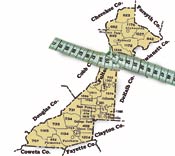 Rather than continue subsidizing surrounding Fulton County, Atlanta and 10 other existing cities to the tune of $190 million a year, Sandy Springs, with the approval of 94% of its electorate, made the bold move to set its own course, take back the better part of its money, and deliver high-quality, low-cost public services in a more federalist-oriented, common-sense way staffed with only a mayor, a city council, and a handful of city employees.
Now, finally, the raspy-throated advocates of virtual annexation go quiet as Sandy Springs embarks on a political experiment perfectly un-thought-of by it menacing municipal neighbor: To privatize nearly every city function and constrain its own circle of action to the essentials of setting policy, community planning and budgeting. Basic city services will be managed but outsourced wherever feasible. Mayor Eva Galambos claims,
Sandy Springs has developed a strict set of codes regulating adult entertainment operations such as strip clubs and pornography shops. WSB-TV reports that “The Sandy Springs City Council approved measures...that prohibit alcohol and VIP rooms at adult clubs in the city. In addition, video stores in the area cannot have 'booths' anymore and the shops must also be 400 feet from churches. They can stay for 5 years at their current locations, but then they have to move to a district that will be selected and zoned for such activity.”
The first order of business for Arcata’s oddly-named Committee on Democracy and Corporations was to propose Measure F, the ‘formula restaurant’ cap, effectively banning chain stores. With Measure F, which passed by 60% as a referendum, Arcata has “banned certain types of formula businesses. These laws do not prevent a chain store from coming in, but they do require that the incoming chain not look or operate like any other branch in the country. This has proved a significant deterrent to chains, which generally refuse to veer from their standardized, cookie-cutter approach.” The Arcata ordinance, No. 1333, limits the number of formula restaurants to a grand total of nine. From Hometown Advantage:
So what does Asheville have in common with either Arcata or Sandy Springs?
Certainly, our locals have a corresponding penchant for bumper-sticker activism. But more seriously though, they have now voted in the most progressive city council in its history. The city that used to be innocuously referred to as the “freak capital of the South” has now come to be dominated by hard-line, Left-leaning, anti-capitalist, big government, busybody political bullies bent on stamping out jobs, compelling you to junk your car and ride the bus, and planning Asheville into a ghost town of starving artists and hungrier taxpayers.
And what is their view of the role of government in a free society? Again, the similarities with Arcata are predominant where government is increasingly the answer to social and economic questions.
Who, in the end, is left to pay for these errors? The working poor who are being squeezed out; property owners who now might like to sell out; business owners who pass along their tax and regulation burdens as higher prices and lower wages. Even the Leftist’s who voted in this kind of government will pay as taxes and costs increase while services and opportunities shrink. It would appear that the Left voted for its own welfare before it voted against it.
In the end, we seem to have more in common with the tired, suffocating approach to governance found in the Left-coast city of Arcata than the freedom-loving, Constitutional approach displayed by the newly-minted Southern city of Sandy Springs.
In the philosophical tug-of-war between the overbearing governmental excesses of Arcata and the refreshing, liberty-oriented model provided by Sandy Springs, we, the citizens of the city of Asheville are witness to a moral contest played out in the real world that must certainly result in entirely different outcomes.
And as we watch for those outcomes to materialize with equally real-world consequences for the long term, we still have our own moral struggles to encounter. Here in Asheville, we bob and billow in the swells of a momentous sea-change that will define our particular stand on the role of government for years to come.
Solemn history, however, will note whether or not this change will indeed represent that progress that our elected leaders have so fatuously touted.
RELATED
Sandy Springs, Georgia: The City that Outsourced Everything
Public-Private Partnerships for Local Governments: The Sandy Springs Model
Oliver Porter | Reason Foundation | January 29, 2010
Imagine starting a new city of over 90,000 people with only two employees. We did it.
Formula Restaurant Cap:
http://www.newrules.org/retail/arcata.html
Formula Business Restrictions:
http://www.newrules.org/retail/formula.html
Arcata City Hall:
http://www.arcatacityhall.org/
Arcata Resolution to Impeach the President:
http://www.commondreams.org/news2006/0105-02.htm
Arcata Nuclear Free Zone Commission:
http://www.arcatacityhall.org/com_com/nwfz_agendas/nuke_free/documents.html
Arcata Eye Newspaper:
http://www.arcataeye.com/
Inaugural Address by Mayor Eva Galambos:
http://www.sandyspringsga.org/docs/presskit_mayorsaddress.doc
Incredible Shrinking County by Scott Henry, Creative Loafing, Jan 27, 2005
http://atlanta.creativeloafing.com/2005-01-27/news_feature.html
The Real Sandy Springs Effect by Geoffrey Segal, Reason Foundation, Dec 2, 2005
http://www.reason.org/commentaries/segal_20051202.shtml
Outsourcing City Hall by Jesse Walker, Reason Magazine, Jan 3, 2006
http://www.reason.com/links/links010306.shtml
Sandy Springs Limits Adult Clubs. WBS-TV, December 28, 2005
http://www.wsbtv.com/news/5688939/detail.html
A Georgia Town Takes the People’s Business Private
By David Segal | New York Times | June 23, 2012
Does the Sandy Springs approach work? It does for Sandy Springs, says the city manager, John F. McDonough, who points not only to the town’s healthy balance sheet but also to high marks from residents on surveys about quality of life and quality of government services.
Mountain Guardian
February 8, 2006
"That government is best which governs least." -Thomas Paine
Should the government own and operate a commercial business?
Should the government run schools, water systems or outdoor music festivals?
Does the government have special knowledge that makes it the best vehicle for delivering products and services to the citizens who have loaned it their power?
Or should government limit itself to what it does well and leave the rest to the marketplace of talent, expertise and efficiency.
There are two small towns in America that are attempting to answer these questions; not theoretically, but with real public policy enactment. These two towns have very different views on the role of government in small-town America: One is Sandy Springs, Georgia, and the other is Arcata, California.
Sandy Springs has adopted a more libertarian, hands-off approach while Arcata has its micromanaging fingerprints on virtually every issue in the public arena, to even include officially passing judgment on national and international matters.
The coastal college town of Arcata, California, situated in upstate Humboldt County near the famous marijuana fields of The Emerald Triangle, has finally rounded out its 5-member city council with an all-progressive team, to include the mayor. In fact, three current council members belong to the Green Party. Even the local sheriff calls his hometown “the People’s Republic of Arcata.”
"Government without true democracy threatens the well-being of planet earth." -Arcata Vice Mayor David MeserveKen Hoover, a reporter from the Arcata Eye newspaper, labors to point out that the Green Party in Arcata is “dysfunctional.” But the fact remains that Arcata's leaders "lean about as far left as you can get in America.” This remark was uttered by Fox News anchor Brit Hume who reported on this quiet community in a two-minute piece January 17, 2006, and brought to a wider public view developments previously hidden behind the veil of isolation.
But I don't know who to believe; number one rated Fox News or a local Arcata broadsheet that characterizes a prominent female Fox News correspondent as one of “the shimmering Botox-blonde newsbunnies the network appears able to manufacture at will.”
At any rate, perhaps we can judge the nature of their city government more by their actions than any other measure.
The anti-Bush council adopted a “New Year’s Resolution” demanding the impeachment or resignation of the President and Vice-President for the crimes of misleading America into war, the crime of responding slowly to Hurricane Katrina, the crime of spying, and the crime of torture.
Arcata has produced a Greenhouse Gas Reduction Plan and a Pesticide Reduction Plan. Among its several boards and commissions are the Nuclear Free Zone Commission, the Open Space Committee, a Homeless Services Plan Task Force, and the Committee on Democracy and Corporations. City Council has already placed a ban on national chain retail stores.
Greens, liberals and Leftists are having a field day in the wetlands of Arcata. But that is their right, is it not? They were voted in by a majority and they can do as they please.
In severe contrast to the strident developments taking shape in Arcata, let’s turn now to the emerging changes we see in another similar small town; this time closer to home, in Georgia.
In December of 2005, the newly incorporated City of Sandy Springs, Georgia, just to the north of Atlanta proper, rose not from ashes but from a 30-year struggle to fend off the greedy advances of an engulfing, Democrat-controlled megalopolis. Actually, this new city of 84,000 has been in the making for about 80 years as a nascent and thriving family-oriented community. Mayor Eva Galambos, quoting a favorite weblog, says, “Giving birth to the city of Sandy Springs is like birthing a teenager.”
 Rather than continue subsidizing surrounding Fulton County, Atlanta and 10 other existing cities to the tune of $190 million a year, Sandy Springs, with the approval of 94% of its electorate, made the bold move to set its own course, take back the better part of its money, and deliver high-quality, low-cost public services in a more federalist-oriented, common-sense way staffed with only a mayor, a city council, and a handful of city employees.
Now, finally, the raspy-throated advocates of virtual annexation go quiet as Sandy Springs embarks on a political experiment perfectly un-thought-of by it menacing municipal neighbor: To privatize nearly every city function and constrain its own circle of action to the essentials of setting policy, community planning and budgeting. Basic city services will be managed but outsourced wherever feasible. Mayor Eva Galambos claims,
“We have harnessed the energy of the private sector to organize the major functions of city government instead of assembling our own bureaucracy. This we have done because we are convinced that the competitive model is what has made America so successful. And we are here to demonstrate that this same competitive model will lead to an efficient and effective local government.” – Inaugural Address, November 30, 2005Other localities, namely Milton and Riverside, stand ready to emulate Sandy Springs and incorporate with the same perspective on government responsibility, accountability and transparency as its predecessor. Even existing municipalities in the area, like Roswell and Alpharetta, are watching closely to see if this particular brand of government might not be right for them as well. Indeed, the example of Sandy Springs may bring a boom in city-building throughout unincorporated Fulton County—and beyond.
“The eyes of metro Atlanta, of Georgia, and indeed, the nation, are on us as we begin our wonderful civic adventure in self-government.” – Mayor Galambos, Inaugural Address, November 30, 2005The cities of Sandy Springs and Arcata are polar opposites in many ways. But they have some similarities: Both are eager to regulate the types of businesses they will allow.
Sandy Springs has developed a strict set of codes regulating adult entertainment operations such as strip clubs and pornography shops. WSB-TV reports that “The Sandy Springs City Council approved measures...that prohibit alcohol and VIP rooms at adult clubs in the city. In addition, video stores in the area cannot have 'booths' anymore and the shops must also be 400 feet from churches. They can stay for 5 years at their current locations, but then they have to move to a district that will be selected and zoned for such activity.”
The first order of business for Arcata’s oddly-named Committee on Democracy and Corporations was to propose Measure F, the ‘formula restaurant’ cap, effectively banning chain stores. With Measure F, which passed by 60% as a referendum, Arcata has “banned certain types of formula businesses. These laws do not prevent a chain store from coming in, but they do require that the incoming chain not look or operate like any other branch in the country. This has proved a significant deterrent to chains, which generally refuse to veer from their standardized, cookie-cutter approach.” The Arcata ordinance, No. 1333, limits the number of formula restaurants to a grand total of nine. From Hometown Advantage:
“Formula businesses include retail stores, restaurants, hotels and other establishments that are required by contract to adopt standardized services, methods of operation, decor, uniforms, architecture or other features virtually identical to businesses located in other communities.”So Sandy Springs bans hard-core porn and Arcata bans Shoney’s. Thus, even in their similarities they are dissimilar.
So what does Asheville have in common with either Arcata or Sandy Springs?
Certainly, our locals have a corresponding penchant for bumper-sticker activism. But more seriously though, they have now voted in the most progressive city council in its history. The city that used to be innocuously referred to as the “freak capital of the South” has now come to be dominated by hard-line, Left-leaning, anti-capitalist, big government, busybody political bullies bent on stamping out jobs, compelling you to junk your car and ride the bus, and planning Asheville into a ghost town of starving artists and hungrier taxpayers.
And what is their view of the role of government in a free society? Again, the similarities with Arcata are predominant where government is increasingly the answer to social and economic questions.
- Asheville has as one of its key assets a creaky civic center in disrepair, which perennially operates in the red and has repair estimates in the millions. It is interesting, though, that one council member recently remarked that “it’s pretty hard to make the case that we should even own a civic center.”
- When sound, high-density residential development comes to town, we blithely require that they simply tack on prohibitively expensive “green roofs” to their limited budget in exchange for permission to provide attractive, affordable and much-needed intown housing.
- We deny cab drivers the right to set their own prices in a free market for the services they provide by haggling in city hall over a three-cent per 1/10th mile rate increase. However, Asheville is certainly not unique in this detrimental interference in the marketplace.
- We throw up so many barriers to the world’s most successful retail chain that it faces costly delays and perhaps even has to return to the drawing board to reconsider the wisdom of providing Asheville with hundreds of jobs and millions of dollars in tax revenues.
- We pass out biased, anonymous surveys to merchants in order to determine, albeit through consensus, specifically in what manner we will control other people’s property with ordinance modifications. Call it consensus or democracy—mob rule in politics is an affront to individual liberty.
- We are happy to repeat California’s mistake of legislating open space leading to the economic banishment of low-wage workers, renters and home-owners.
- Our police and fire-and-safety departments are terribly understaffed and underpaid and yet council members are quick to point out that the city’s personnel budget is already bloated and there appears to be no more room for increased payroll expenditures at this juncture.
- And we now see a progressive majority, engaging in a purely political abuse of power, daring to completely shut out the minority and aggressively pack boards and commissions with like-minded comrades who will push the preeminent Leftist agenda on every issue open to governance.
Who, in the end, is left to pay for these errors? The working poor who are being squeezed out; property owners who now might like to sell out; business owners who pass along their tax and regulation burdens as higher prices and lower wages. Even the Leftist’s who voted in this kind of government will pay as taxes and costs increase while services and opportunities shrink. It would appear that the Left voted for its own welfare before it voted against it.
In the end, we seem to have more in common with the tired, suffocating approach to governance found in the Left-coast city of Arcata than the freedom-loving, Constitutional approach displayed by the newly-minted Southern city of Sandy Springs.
In the philosophical tug-of-war between the overbearing governmental excesses of Arcata and the refreshing, liberty-oriented model provided by Sandy Springs, we, the citizens of the city of Asheville are witness to a moral contest played out in the real world that must certainly result in entirely different outcomes.
And as we watch for those outcomes to materialize with equally real-world consequences for the long term, we still have our own moral struggles to encounter. Here in Asheville, we bob and billow in the swells of a momentous sea-change that will define our particular stand on the role of government for years to come.
Solemn history, however, will note whether or not this change will indeed represent that progress that our elected leaders have so fatuously touted.
RELATED
Sandy Springs, Georgia: The City that Outsourced Everything
Public-Private Partnerships for Local Governments: The Sandy Springs Model
Oliver Porter | Reason Foundation | January 29, 2010
Imagine starting a new city of over 90,000 people with only two employees. We did it.
Formula Restaurant Cap:
http://www.newrules.org/retail/arcata.html
Formula Business Restrictions:
http://www.newrules.org/retail/formula.html
Arcata City Hall:
http://www.arcatacityhall.org/
Arcata Resolution to Impeach the President:
http://www.commondreams.org/news2006/0105-02.htm
Arcata Nuclear Free Zone Commission:
http://www.arcatacityhall.org/com_com/nwfz_agendas/nuke_free/documents.html
Arcata Eye Newspaper:
http://www.arcataeye.com/
Inaugural Address by Mayor Eva Galambos:
http://www.sandyspringsga.org/docs/presskit_mayorsaddress.doc
Incredible Shrinking County by Scott Henry, Creative Loafing, Jan 27, 2005
http://atlanta.creativeloafing.com/2005-01-27/news_feature.html
The Real Sandy Springs Effect by Geoffrey Segal, Reason Foundation, Dec 2, 2005
http://www.reason.org/commentaries/segal_20051202.shtml
Outsourcing City Hall by Jesse Walker, Reason Magazine, Jan 3, 2006
http://www.reason.com/links/links010306.shtml
Sandy Springs Limits Adult Clubs. WBS-TV, December 28, 2005
http://www.wsbtv.com/news/5688939/detail.html
A Georgia Town Takes the People’s Business Private
By David Segal | New York Times | June 23, 2012
Does the Sandy Springs approach work? It does for Sandy Springs, says the city manager, John F. McDonough, who points not only to the town’s healthy balance sheet but also to high marks from residents on surveys about quality of life and quality of government services.
The More the Merrimon
By Tim Peck
Mountain Guardian
February 8, 2006
The City Council of Asheville, City Staff, and the Planning and Zoning Commission have responded to the pressures of certain neighborhood alliances and concerned citizens and intend to overhaul development ordinances for the Merrimon Avenue business corridor to be more closely aligned with their wishes for its future. Merrimon Avenue is a burgeoning, 4-mile commercial strip running through North Asheville connecting it to the communities of Beaver Dam, Woodfin and Weaverville.
One method they will employ as an input into these code revisions will be the results of an 8-question survey to ascertain the general mood of business owners and residents. Ostensibly, the objective of the re-zoning of this major corridor and gateway to the city is to encourage development that is viewed as popular or desirable and limit or constrain what is unpopular or undesirable.
What is at stake is the ability of property owners to determine the best use of their resources in this thriving sector of the city. Also, considerations of street widening, signal calibration, bike lanes and sidewalks will be taken into account.
Merrimon Avenue is not owned by the city but is maintained by the state. Several years ago, in an effort to alleviate congestion, NC DOT completed a feasibility study on Merrimon Avenue to consider widening the road from its current three-lane configuration to five lanes. The costs involved in the necessary purchasing of rights-of-way by the City make the project financially unrealistic. Another proposal to break up traffic bottlenecks, suggested by some concerned citizens, recommends turning Merrimon Avenue into a two-lane highway with a middle turning lane. However, it is highly unlikely that DOT would approve such a change.
Ultimately, by a 6-1 vote, City Council approved mailing the survey to business owners and residents along the Merrimon Avenue corridor on February 1, 2006, with the expectation that responses could be compiled, documented and analyzed by February 28th in preparation for a draft re-zoning proposal to be assessed, revised and finalized by the end of April or soon after.
In contrast to Carl Mumpower’s lone dissent on the entire question, Mayor Terry Bellamy urged that others outside the immediate neighborhood also be encouraged to respond to the survey. The Mayor stated at the meeting that this is a very important issue and that everyone using Merrimon Avenue has an interest in how this vital corridor is to be developed. Targeted participants can further disseminate the survey to friends and associates. The survey is available online and is even being advertised in rotation on the City's cable TV station on channel 11. All of this, purportedly, in an effort to gain an adequately wide set of data for input into the rapidly approaching re-zoning deliberations.
The effort to involve a community of interests in determining the future of Merrimon Avenue is laudable. But the method of information gathering exposes the process to certain risks that can have significant if not fatal consequences for the economic health of the commercial district in question. In fact, a large number of Merrimon property owners have recently formed an association of their own to help protect their interests in this process. They have expressed concern that their interests might be minimized or possibly overlooked entirely by zealous activists during the hasty fact-finding process.
A quick read of the questionnaire that promises to inform zoning decisions provokes a number of questions. First among them: Is this survey free from bias? Second: Is there any risk of fraud, error or misinterpretation? If so, to what degree?
One problem that is immediately evident in addressing these questions is the fact that the survey is anonymous. Ideally, the person who was mailed the survey will be the one who submits the survey. But there is no guarantee of this. One person could submit multiple surveys with the same responses and effectively skew the results. In fact, with the anonymous survey available online to anyone with an internet connection, there are no controls at all to ensure that the responding survey population is the same as the targeted survey population. If this survey is to be anonymous, as it is, then ultimately the results can be subject to selection bias and called into question and dismissed as distorted until a ‘bona fide’ survey can be conducted that could trace responses to legitimate individuals within the original targeted population.
Another problem is that the questions in the survey are leading. They tend to lead the respondents to socially acceptable answers prompted by groupthink. This exposes the survey to the risk of social bias. This is the pressure respondents might feel to conform to socially-accepted points of view. Responses could be reflective of a social construction of reality where we compare our views with a favored in-group to gain reassurance that our views are not at variance with consensus; also known as the bandwagon effect.
Then there is the problem of misinterpretation. The brief survey asks only 8 narrowly-defined questions and the multiple choices offered are not exhaustive. This can lead to confirmation bias, which is a tendency to search for or interpret information in a way that confirms the surveyor’s preconceptions. That several of the questions are open-ended only increases the risk of misinterpretation. There is also the problem of non-responses that can weight the results in favor of activists. And surveyors may interpret vague or blank responses in ways that might support a preferred result.
The survey is open to information bias. Respondents are likely not economists and may not have the objective means for determining what is in their own economic interest. In fact, they may harbor distinctly anti-business prejudices that could color their responses in subjective ways and leave the impression that the interests of business-people and those of the community are at odds and may be irreconcilable.
Finally, there is the issue of the timing of the survey. We have heard from representatives of the neighborhood associations that “time is of the essence” in developing a satisfactory set of codes. To be sure, Merrimon Avenue is rapidly growing and needs to have the proper rules in place to guide development. But is this really the right moment to take the temperature of the public on the far-reaching question of zoning in this vital sector of town? And must the process turn around in the span of 2 months? This survey rolls out at a time when emotions are running high over recent development mishaps, intentional or not. To name just a few sore points:
The newly constructed Staples office supply store, which has complied with the letter of the law in the Uniform Development Ordinance (UDO) and the Asheville 2025 Plan, is alternately described as a behemoth or an eye-sore by anti-development advocates and some in the media because of its menacing, fortress-like red brick street abutment and gaudy signage.
The uncomfortable proximity of the awkward Greenlife grocery loading dock has exited great anxiety among certain of its neighbors and outright furor in others. The conflict has generated angry protestations at the site, in the media, and in City Hall.
Recently, Walgreen’s drugstore flagrantly ignored binding construction agreements prompting the City to quickly issue a “stop work” order and initiate an investigation into the violations. The developer had applied for a permit to “renovate” the old Ace hardware store on that site; however, without proper approval of a variance, they moved ahead to demolish the building completely and begin construction of an entirely new building with a 112% improvement value estimated at a cost of $1 million. This far exceeds the definition of “renovation” which is limited by code to a 50% improvement cost.
The bottom line here is that this may not be the best time to gain a cool-headed assessment of the long-term zoning constraints that would be placed on future development initiatives. Could we possibly get a different set of survey results, say, a year from now? At the meeting to approve the survey, Carl Mumpower stated that, with the exception of a few new buildings and the refurbishing of some others, the corridor had not changed appreciably in the past 10 years.
Opinion
Council member Robin Cape has raised the possibility that the Merrimon Avenue Zoning Study could become a model for community development at large in Asheville‘s future I have to hope not. There is too much at stake here and there are too many risks involved in this particular methodology for it to become a standard response to economic development.
With the exception of the self-inflicted Staples debacle, the present zoning of the corridor has served the community very well. Property owners wishing to build or expand outside the constraints of present ordinances must seek approval from the P&Z Commission and then City Council. During this case-by-case review process, neighbors have an opportunity to express their concerns. To now overlay such a large area with a one-size-fits-all straight-jacket is an example of inappropriate and overzealous planning that may not retain its appropriateness over the long-term.
The demand-driven marketplace will determine the future of Merrimon Avenue and the risk of fraud, error, misinterpretation or possibly outright manipulation in this information gathering process lacks the gravitas sufficient to the proposed task of setting guidelines for business owners, property owners and entrepreneurs who are clamoring to invest in our city and stimulate our much needed economic growth.
We should all be encouraged to provide input into what Asheville is to become. And we do so with home sales, rents, and purchasing dollars. We vote with our feet, our cars and our wallets. To hand over our economic future to an elite cadre of activists, interlopers and phantom citizens does us all a disservice. Will activist students in temporary residences at nearby colleges become involved in the Merrimon Avenue study, skew it’s results, and dictate the city‘s future growth for the rest of us? At a large demonstration recently held to oppose a new Wal-Mart Super Center proposed for Smokey Park Highway in West Asheville, over 90% of the 100 demonstrators were students from UNC Asheville and Warren Wilson College in Swannanoa.
Mountain Guardian
February 8, 2006
The City Council of Asheville, City Staff, and the Planning and Zoning Commission have responded to the pressures of certain neighborhood alliances and concerned citizens and intend to overhaul development ordinances for the Merrimon Avenue business corridor to be more closely aligned with their wishes for its future. Merrimon Avenue is a burgeoning, 4-mile commercial strip running through North Asheville connecting it to the communities of Beaver Dam, Woodfin and Weaverville.
One method they will employ as an input into these code revisions will be the results of an 8-question survey to ascertain the general mood of business owners and residents. Ostensibly, the objective of the re-zoning of this major corridor and gateway to the city is to encourage development that is viewed as popular or desirable and limit or constrain what is unpopular or undesirable.
What is at stake is the ability of property owners to determine the best use of their resources in this thriving sector of the city. Also, considerations of street widening, signal calibration, bike lanes and sidewalks will be taken into account.
Merrimon Avenue is not owned by the city but is maintained by the state. Several years ago, in an effort to alleviate congestion, NC DOT completed a feasibility study on Merrimon Avenue to consider widening the road from its current three-lane configuration to five lanes. The costs involved in the necessary purchasing of rights-of-way by the City make the project financially unrealistic. Another proposal to break up traffic bottlenecks, suggested by some concerned citizens, recommends turning Merrimon Avenue into a two-lane highway with a middle turning lane. However, it is highly unlikely that DOT would approve such a change.
Ultimately, by a 6-1 vote, City Council approved mailing the survey to business owners and residents along the Merrimon Avenue corridor on February 1, 2006, with the expectation that responses could be compiled, documented and analyzed by February 28th in preparation for a draft re-zoning proposal to be assessed, revised and finalized by the end of April or soon after.
In contrast to Carl Mumpower’s lone dissent on the entire question, Mayor Terry Bellamy urged that others outside the immediate neighborhood also be encouraged to respond to the survey. The Mayor stated at the meeting that this is a very important issue and that everyone using Merrimon Avenue has an interest in how this vital corridor is to be developed. Targeted participants can further disseminate the survey to friends and associates. The survey is available online and is even being advertised in rotation on the City's cable TV station on channel 11. All of this, purportedly, in an effort to gain an adequately wide set of data for input into the rapidly approaching re-zoning deliberations.
The effort to involve a community of interests in determining the future of Merrimon Avenue is laudable. But the method of information gathering exposes the process to certain risks that can have significant if not fatal consequences for the economic health of the commercial district in question. In fact, a large number of Merrimon property owners have recently formed an association of their own to help protect their interests in this process. They have expressed concern that their interests might be minimized or possibly overlooked entirely by zealous activists during the hasty fact-finding process.
A quick read of the questionnaire that promises to inform zoning decisions provokes a number of questions. First among them: Is this survey free from bias? Second: Is there any risk of fraud, error or misinterpretation? If so, to what degree?
One problem that is immediately evident in addressing these questions is the fact that the survey is anonymous. Ideally, the person who was mailed the survey will be the one who submits the survey. But there is no guarantee of this. One person could submit multiple surveys with the same responses and effectively skew the results. In fact, with the anonymous survey available online to anyone with an internet connection, there are no controls at all to ensure that the responding survey population is the same as the targeted survey population. If this survey is to be anonymous, as it is, then ultimately the results can be subject to selection bias and called into question and dismissed as distorted until a ‘bona fide’ survey can be conducted that could trace responses to legitimate individuals within the original targeted population.
Another problem is that the questions in the survey are leading. They tend to lead the respondents to socially acceptable answers prompted by groupthink. This exposes the survey to the risk of social bias. This is the pressure respondents might feel to conform to socially-accepted points of view. Responses could be reflective of a social construction of reality where we compare our views with a favored in-group to gain reassurance that our views are not at variance with consensus; also known as the bandwagon effect.
Then there is the problem of misinterpretation. The brief survey asks only 8 narrowly-defined questions and the multiple choices offered are not exhaustive. This can lead to confirmation bias, which is a tendency to search for or interpret information in a way that confirms the surveyor’s preconceptions. That several of the questions are open-ended only increases the risk of misinterpretation. There is also the problem of non-responses that can weight the results in favor of activists. And surveyors may interpret vague or blank responses in ways that might support a preferred result.
The survey is open to information bias. Respondents are likely not economists and may not have the objective means for determining what is in their own economic interest. In fact, they may harbor distinctly anti-business prejudices that could color their responses in subjective ways and leave the impression that the interests of business-people and those of the community are at odds and may be irreconcilable.
Finally, there is the issue of the timing of the survey. We have heard from representatives of the neighborhood associations that “time is of the essence” in developing a satisfactory set of codes. To be sure, Merrimon Avenue is rapidly growing and needs to have the proper rules in place to guide development. But is this really the right moment to take the temperature of the public on the far-reaching question of zoning in this vital sector of town? And must the process turn around in the span of 2 months? This survey rolls out at a time when emotions are running high over recent development mishaps, intentional or not. To name just a few sore points:
The newly constructed Staples office supply store, which has complied with the letter of the law in the Uniform Development Ordinance (UDO) and the Asheville 2025 Plan, is alternately described as a behemoth or an eye-sore by anti-development advocates and some in the media because of its menacing, fortress-like red brick street abutment and gaudy signage.
The uncomfortable proximity of the awkward Greenlife grocery loading dock has exited great anxiety among certain of its neighbors and outright furor in others. The conflict has generated angry protestations at the site, in the media, and in City Hall.
Recently, Walgreen’s drugstore flagrantly ignored binding construction agreements prompting the City to quickly issue a “stop work” order and initiate an investigation into the violations. The developer had applied for a permit to “renovate” the old Ace hardware store on that site; however, without proper approval of a variance, they moved ahead to demolish the building completely and begin construction of an entirely new building with a 112% improvement value estimated at a cost of $1 million. This far exceeds the definition of “renovation” which is limited by code to a 50% improvement cost.
The bottom line here is that this may not be the best time to gain a cool-headed assessment of the long-term zoning constraints that would be placed on future development initiatives. Could we possibly get a different set of survey results, say, a year from now? At the meeting to approve the survey, Carl Mumpower stated that, with the exception of a few new buildings and the refurbishing of some others, the corridor had not changed appreciably in the past 10 years.
Opinion
Council member Robin Cape has raised the possibility that the Merrimon Avenue Zoning Study could become a model for community development at large in Asheville‘s future I have to hope not. There is too much at stake here and there are too many risks involved in this particular methodology for it to become a standard response to economic development.
With the exception of the self-inflicted Staples debacle, the present zoning of the corridor has served the community very well. Property owners wishing to build or expand outside the constraints of present ordinances must seek approval from the P&Z Commission and then City Council. During this case-by-case review process, neighbors have an opportunity to express their concerns. To now overlay such a large area with a one-size-fits-all straight-jacket is an example of inappropriate and overzealous planning that may not retain its appropriateness over the long-term.
The demand-driven marketplace will determine the future of Merrimon Avenue and the risk of fraud, error, misinterpretation or possibly outright manipulation in this information gathering process lacks the gravitas sufficient to the proposed task of setting guidelines for business owners, property owners and entrepreneurs who are clamoring to invest in our city and stimulate our much needed economic growth.
We should all be encouraged to provide input into what Asheville is to become. And we do so with home sales, rents, and purchasing dollars. We vote with our feet, our cars and our wallets. To hand over our economic future to an elite cadre of activists, interlopers and phantom citizens does us all a disservice. Will activist students in temporary residences at nearby colleges become involved in the Merrimon Avenue study, skew it’s results, and dictate the city‘s future growth for the rest of us? At a large demonstration recently held to oppose a new Wal-Mart Super Center proposed for Smokey Park Highway in West Asheville, over 90% of the 100 demonstrators were students from UNC Asheville and Warren Wilson College in Swannanoa.
Monday, January 23, 2006
Citizen Kulba
 As many know, long-time Asheville resident and political activist Leslee Kulba has become the heart and soul of pro-individualist politics in Asheville. You can find her anywhere the voice of liberty needs to have a say. And in Asheville, that is a lot of places.
She regularly attends City Council meetings and reports on the proceedings to a select mailing list. The report she produces emerges from copious notes furiously scribbled on notepad sheets as she strains to hear every comment uttered at hours-long meetings and worksessions. Those lucky enough to receive her finished product by email find it indispensable and the key to staying informed about public policy in the City.
Leslee is no mere stenographer or news reporter. First, Leslee does her homework long before attending these public meetings. She carefully reviews the Council agenda and picks through staff reports and supporting documents. While reading through dry text, tables, charts and drawings, Leslee sees beyond the surface print to discern the underlying context. Aspects that other observers can overlook emerge in high relief in her mind. And she is quick to pounce on suspicious incongruities or reckless fast-track proposals that might risk compromising Constitutional principles, the corruption of ethics, or the circumvention of due process and precedent.
Immediately on the heels of adjournment, Leslee dashes home to transcribe her chicken-scratches into a coherent chronological record; often working well into the late night. The final version of her City Council Report contains more than a factual re-reading of a stuffy meeting. It is throughout peppered with incisive commentary, hard-nosed libertarian perspective, coveted insider knowledge, and biting wit and sarcasm. All the while, the report maintains an informal, conversational feel that makes for a friendly, comfortable read.
 I am proud to be able to take Leslee's report, with her permission, and format her text for the web on the Asheville City Council weblog. I will also, on occasion, add some of my own commentary--again, with her permission--that I think will enhance the overall quality of Leslee's product. With the addition of a few photos from the event, this version of Leslee's report provides the best presentation of what she has to offer: an informative, compelling and accessible re-telling of a story about public policy-making in progress wrapped in a slick and pleasing package online. This, I believe, is the treatment Leslee's brilliant and tireless reporting deserves.
Besides composing her own privately-distributed Council reports, Leslee is often called on to write columns for several local newspapers. She is a regular contributor to the Mountain Guardian which happily prints her every un-edited word no matter the length. She is also published in the conservative Asheville Tribune. And her letters-to-the-editor are often found elevating the common discourse in papers such as the Asheville Citizen-Times and the Mountain Xpress.
Beyond the printed pages of these publications, Leslee's abundant and insighful opinions spill over into the hit-and-run emails she sends to the many email lists she belongs to, enriching the conversations there and giving passive readers evidence that ideals, passion and an indomitable urge to action are not withering on the her vine.
Leslee can also be found sitting at table with our local Libertarian Party members for their social gatherings. In fact, Leslee is the Secretary and publishes the meeting minutes as organizational matters come up in conversation. She has been a member of the Libertarian Party locally for many years, until forced into the Unaffiliated Party by North Carolina law.
Leslee can be found regularly attending any number of local gatherings, such as the Buncombe GOP or the Coalition of Asheville Neighborhood meetings, to keep up with the several hot-topic community issues bubbling to the surface as Asheville feels its growing pains.
During election season, Leslee wears herself out vigorously campaigning for her favored pols. If a candidate is Constitutionally-principled, consistently pro-liberty, and of high moral character, Leslee will throw them her support with the greatest of energy and commitment. Whether the campaign needs signs painted, leaflets distributed or neighborhoods canvassed, Leslee is ready to devote boundless energy to the cause and sweeps many others into her tailwind as she moves forward to realize her objective of turning this city in the hills into a "City on a Hill."
Finally, I have to confess that I am proud to know Leslee Kulba and to be able to work with her on any project she deems worthy of her attention and effort. Anything I do in the political arena in Asheville is from the perspective of standing on her shoulders. Any time I add to her output or activity, it is done only to enhance the value of what she already brings to the table. Not only to I like Leslee personally, I deeply admire Leslee's talent and professionalism, her uncompromising devotion to her principles, her unflagging commitment to focus herself and her fellows on the essentials, and her drive to achieve what is best for our city and our country and place us all on the side of the angels.
Thank you Leslee. You're the best.

Tuesday, January 03, 2006
Department of Peace
 In a recent letter to the editor to the Asheville Citizen-Times("Help make a Department of Peace a reality," 1/3/06), Asheville resident Catherine Holt recommends creating a new department in government: A Department of Peace?
Now isn't that just precious?
She says, "...governments pursue their aims through violence and warfare, and military force is seen as a legitimate way to resolve disputes ...”
I would remind Ms. Holt that the wanton, wholesale murder of 3,000 innocents is not a "dispute." It is an act of war. The only thing in dispute is whether or not I have a right to live. And I have a very unresolvable opinion about that.
I would like to thank the Department of DEFENSE for protecting and preserving the kind of country that gives these precious lunatics the freedom to champion any fantastical, hare-brained scheme that might emerge in their vacant minds, and the latitude to roam freely in the streets unsupervised and unmolested.
I thank the peace-makers in the military. And President Bush: I support you in your difficult task; and any successor who promises to maintain your resolve to protect America from inhuman terrorism, to protect American interests worldwide, and to propagate liberty wherever it is wanting.
Subscribe to:
Posts (Atom)